








Launching a fintech product from scratch sounds appealing at first. Full control, custom features, complete ownership. But once you get into the execution, the reality shifts quickly.
Fintech is not just about building an app. You’re dealing with compliance systems, transaction infrastructure, integrations, security, and ongoing operations. These are not small components. They define how your product actually works.
That’s why more businesses are moving toward ready-made fintech software instead of building everything internally. It’s not about avoiding complexity. It’s about not rebuilding what already exists. If you’re planning to launch a fintech product, understanding how a prebuilt fintech platform works can save both time and cost.
What Is Ready-Made FinTech Software?
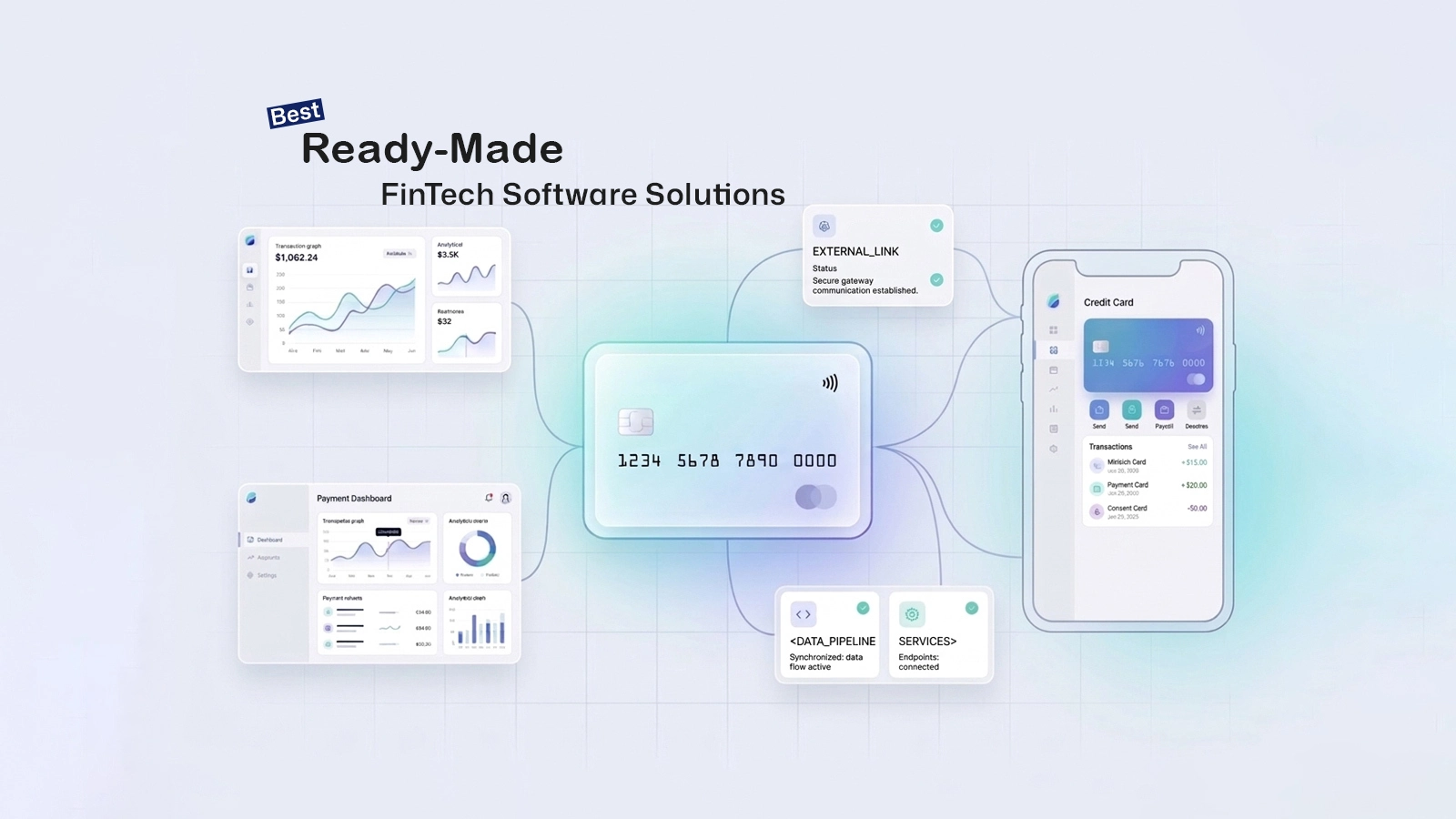
Ready-made fintech software refers to prebuilt systems that allow you to launch financial products without building core infrastructure from scratch. Instead of developing payment systems, compliance layers, and transaction logic yourself, you use a platform that already includes these components.
This approach is commonly used for:
- Digital wallets
- Remittance platforms
- Payment systems
- Banking applications
- Lending platforms
The key advantage is simple. You skip months of backend development and move directly into launching and scaling.
Why Businesses Choose Prebuilt FinTech Platforms
The shift toward ready-made fintech software is not just a trend. It’s a response to how complex fintech products actually are. Most companies don’t fail because of weak ideas. They fail because building the underlying infrastructure takes longer, costs more, and requires more expertise than expected.
Prebuilt platforms solve that problem. Instead of building everything, you start with a system that already works and customize it based on your needs. This changes how you operate. You focus less on engineering complexity and more on product positioning, user acquisition, and growth.
In practice, many businesses rely on established providers rather than building everything internally. Companies like AppDevs have been developing and selling ready-made fintech products for several years, covering areas like digital wallets, remittance systems, and payment platforms. Their products are also available on platforms like CodeCanyon, where they are recognized as an Elite Author on CodeCanyon, reflecting consistent delivery and real market usage. You can also explore their ready-made fintech products to see how these systems are structured for practical deployment. What stands out is not just the availability of prebuilt systems but the fact that these solutions are already tested in real-world scenarios, allowing businesses to launch faster without starting from zero.
Key advantages of ready-made fintech software
- Faster time to market
- Lower upfront development cost
- Built-in compliance support
- Proven and tested infrastructure
- Reduced technical risk
These are not just benefits. They directly affect how quickly you can enter the market.
Types of Ready-Made FinTech Solutions
Not all fintech platforms are the same. The type of solution you choose depends on your business model. A digital wallet platform focuses on storing funds, payments, and transfers. These are commonly used for consumer apps and payment services.
Remittance software is designed for cross-border money transfers. It includes features like currency conversion, transaction tracking, and compliance workflows. Payment platforms focus on processing transactions between users, merchants, and financial institutions.
Banking solutions, often referred to as neo-banking platforms, provide account management, cards, and financial services through digital interfaces. Each category solves a different problem. Choosing the wrong one leads to unnecessary complexity later.
How to Choose the Right FinTech Software
This is where most decisions go wrong. Many businesses choose a platform based on features alone. But in fintech, features are only part of the picture. You need to evaluate how the system behaves under real conditions.
Focus on these factors:
- Compliance capabilities (KYC, AML support)
- Integration flexibility (APIs, payment gateways)
- Scalability and performance
- Customization options
- Security and fraud prevention
The right platform is not necessarily the one with the most features. It’s the one that aligns with your product model and growth plan.
Build vs Ready-Made FinTech Software
This decision defines your entire roadmap. Building from scratch gives you full control. But it also comes with longer timelines, higher costs, and ongoing maintenance responsibilities. Using a prebuilt fintech platform changes the approach. You launch faster, reduce technical risk, and focus on growth instead of infrastructure.
In simple terms:
- Custom build → more control, higher cost, slower launch
- Ready-made → faster launch, lower cost, less complexity
Most startups choose ready-made solutions early and move to custom systems later if needed.
Where Ready-Made Solutions Work Best
Not every project requires a custom system. Ready-made fintech software is most effective when speed and validation matter more than profound customization.
It works well when:
- You want to launch quickly
- You have limited technical resources
- You need compliance handled early
- You are testing a new market or idea
In these scenarios, building from scratch often slows you down unnecessarily.
Limitations You Should Consider
While ready-made fintech software offers clear advantages, it’s not without trade-offs. Customization can be limited depending on the provider. You may not have full control over system architecture or feature expansion.
There is also dependency. Your product relies on the provider’s infrastructure and roadmap. As your business scales, costs may increase, especially if pricing is based on transactions or usage. Understanding these limitations helps you make a more balanced decision.
How to Evaluate a Prebuilt FinTech Platform
Before selecting a solution, it’s important to assess both technical and business factors.
Look at:
- How transactions are processed
- How failures and edge cases are handled
- Reporting and reconciliation capabilities
- Admin and operational tools
- Long-term scalability
A platform that works well in a demo is not always reliable under real conditions.
Final Thoughts
Choosing the right ready-made fintech software is not just a technical decision. It’s a strategic one. It determines how fast you launch, how much you spend, and how easily you can scale.
For most businesses, especially early-stage ones, using a prebuilt fintech platform is the fastest way to enter the market without getting stuck in infrastructure and compliance challenges. If your goal is to validate your idea and grow efficiently, starting with a ready-made solution is often the smartest move.