







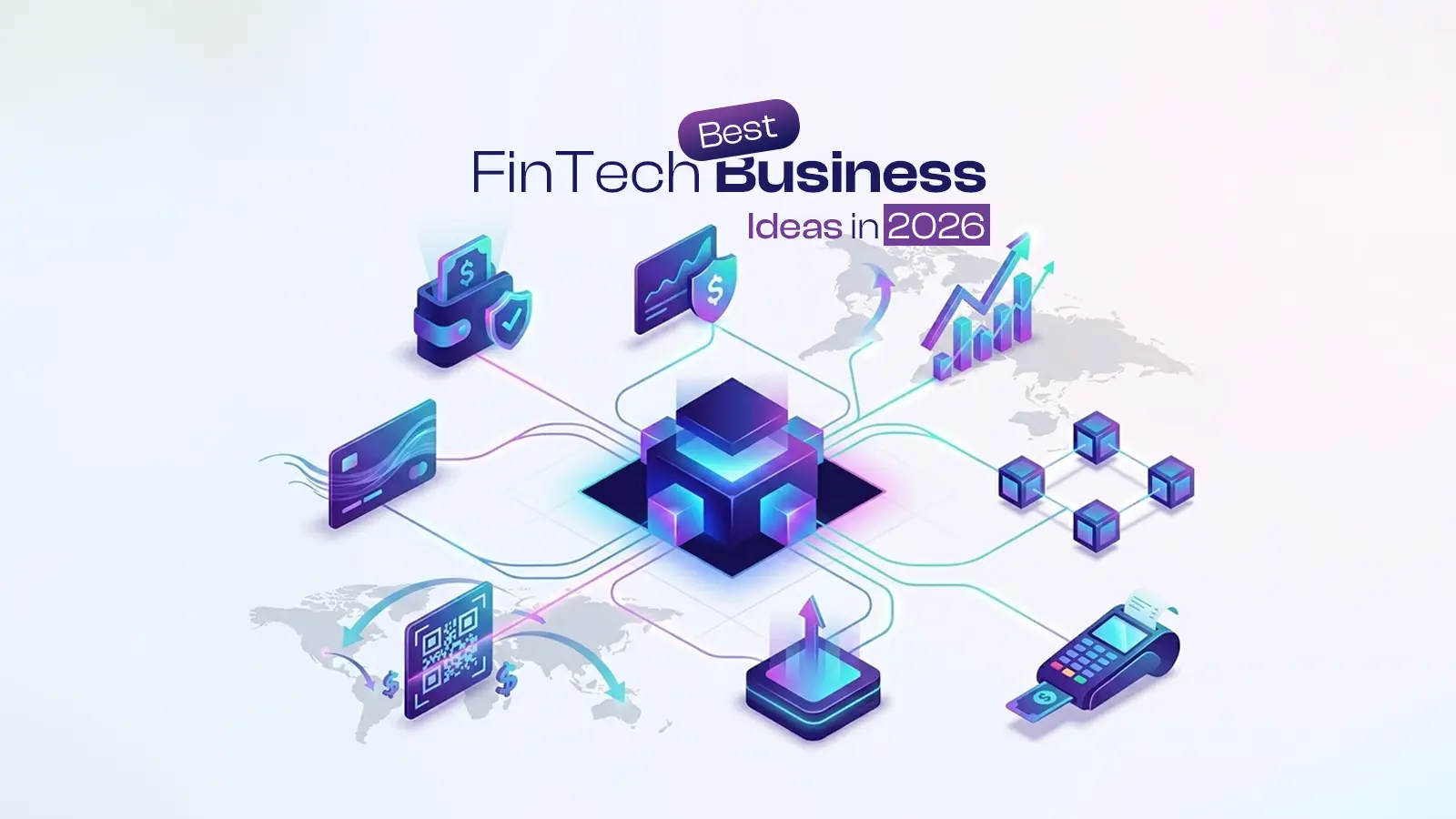
FinTech is no longer just about building a payment app and hoping users show up. In 2026, the strongest fintech startup ideas are the ones tied to a clear workflow, a painful business problem, and a revenue model that scales without becoming operationally messy.
That is the real shift. A few years ago, many founders tried to launch broad “finance apps for everyone.” Now the better opportunities are narrower and more practical. Businesses want faster collections, cleaner reconciliation, controlled spending, simpler remittance, better cash-flow visibility, and more automation around financial operations. Consumers still want speed and convenience, but the strongest profitable fintech ideas increasingly solve business-side problems.
Another reason this market is attractive is that the infrastructure barrier is lower than before. Startups can now launch wallets, which are digital applications for storing payment information, payment tools, card products, invoice systems, and transfer platforms using existing frameworks, application programming interfaces (APIs), and ready-made product foundations. That does not make execution easy, but it does mean the opportunity is more accessible.
This guide breaks down the best fintech business ideas in 2026, why they matter, where the real demand is, and how to think about choosing the right model before you build.
Why FinTech Still Has Strong Startup Potential in 2026
The reason fintech keeps producing new opportunities is simple: money movement is still full of friction. Many businesses still rely on disconnected systems for payments, invoicing, transfers, spend management, and reporting. That creates delays, errors, and manual work. The startups that win are usually the ones that remove friction from one specific financial workflow.
What makes this market especially interesting in 2026 is that several trends are moving in the same direction:
- Digital payments are becoming standard across more industries
- Embedded finance is turning financial tools into product features
- Businesses want stronger control over spending and approvals
- Cross-border activity continues to create demand for better transfer tools
- Finance teams want automation, not more dashboards
- Users expect financial products to be instant, mobile-friendly, and easy to understand
That is why fintech trends in 2026 are less about novelty and more about infrastructure becoming more usable. The strongest ideas are usually not flashy. They are useful.
What Makes a FinTech Idea Worth Building
Before jumping into the list, it helps to define what separates a decent idea from a strong one.
A good fintech startup idea usually has four things:
1. A recurring financial workflow
The best businesses are tied to something that happens repeatedly: payroll, expenses, vendor payments, remittance, invoicing, collections, subscriptions, or merchant settlements.
2. Clear pain
The user should already feel the problem. If you have to explain why the problem matters, the market is probably weak.
3. Measurable value
A fintech product should save time, reduce cost, improve control, lower risk, or increase revenue. Ideally, it does more than one.
4. Realistic distribution
A product can be technically strong and still fail if customer acquisition is unclear. You need a path to users, whether that comes from a niche market, partnerships, content, referrals, or embedded distribution.
When founders ignore these basics, they often end up building software that looks polished but solves a weak problem.
Best FinTech Startup Ideas in 2026
Below are the categories that look strongest in 2026, especially for founders who want to build something practical and scalable.
1) Digital Wallet and Payment Apps
Digital wallets are still one of the most attractive fintech categories because they sit at the center of everyday money movement. A wallet can handle peer-to-peer transfers, bill payments, merchant payments, stored balances, and, in some cases, cross-border activity.
The opportunity is strongest when the wallet is not just “another app" but tied to a specific use case. That could mean a regional wallet, a niche worker payment app, a merchant settlement wallet, or a multi-service payment hub for a defined audience.
Products such as Walletium, Remitium, and iBanking are useful examples of how this segment is often packaged. They show that a wallet product becomes stronger when it combines transfers, payment functionality, account visibility, and user-friendly controls in one environment.
A wallet business is particularly attractive when you can connect it to:
- a merchant ecosystem
- salary or workforce payments
- bill payment habits
- a local or niche financial behavior pattern
The challenge, of course, is trust. Wallet products need clean UX, reliable support, and a strong security posture from day one.
2) QR Payment and Merchant Acceptance Solutions
This is one of the most practical and profitable fintech ideas right now. QR payments are simple to explain, relatively easy for merchants to adopt, and increasingly familiar to users. They also work well in mobile-first environments and for businesses that want to reduce hardware dependence.
The strongest version of this business is not just “generate QR codes.” It is a merchant payment system with settlement, transaction history, reporting, and operational controls. That is why this category keeps growing.
If you want to understand how this model is commonly structured, products like QRPay Pro, and QRPay, provide good examples of different directions the segment can take. One focuses on QR payment ecosystems, another on merchant-side acceptance, and another on contactless payment behavior. Together, they reflect how payment acceptance can be turned into a scalable product line.
This category works well when you target:
- small merchants
- restaurants and cafés
- retail chains
- service providers
- local commerce ecosystems
The real opportunity is not the QR itself. It owns the flow between payment acceptance, merchant confirmation, settlement, and reporting.
3) Virtual Card Issuing and Spend Control Platforms
Virtual card products continue to gain traction because businesses want more control over how money is spent. A virtual card can be issued instantly, locked to a merchant, limited by amount, and expired automatically. That makes it useful for expense management, ad spend, procurement, subscriptions, and vendor payments.
This category becomes compelling when you add workflow intelligence around the card. That means:
- spend rules
- approvals
- policy-based limits
- reconciliation references
- exportable reporting
- role-based controls
StripCard is a strong example of how virtual card issuing can be packaged as a product instead of just a feature. It reflects a broader trend in 2026: businesses do not want “cards” as much as they want controlled spending plus clean reporting.
This is one of the better ideas for founders targeting B2B, because the value is clear and the willingness to pay is usually stronger than in consumer fintech.
4) Cross-Border Remittance and Transfer Platforms
Cross-border payments remain one of the clearest fintech opportunities because the problem is old, visible, and still painful. Users care about speed, transparency, fees, and trust. Businesses care about the same things, plus operational consistency.
A remittance startup does not have to be global from day one. In fact, the strongest businesses often start with a single corridor or a specific audience. That focus improves product design and simplifies distribution.
Products such as XRemit, MoneyMove, and Escroc are useful reference points here. They show that transfer-focused products can take different shapes: direct remittance, gateway-to-gateway transfers, or escrow-based transfer logic. Each serves a different kind of need, but all sit within the broader money movement category.
This idea works best when you can define:
- a clear sending/receiving audience
- strong trust signals
- a faster or simpler transfer experience
- transparent pricing
Remittance is not an easy operation, but demand remains durable.
5) Invoice and Payment Link Platforms
This is one of the most underrated fintech opportunities. Not every strong business idea needs to be a wallet, bank, or complex card product. Sometimes, the better opportunity is solving a smaller workflow extremely well.
Invoice and payment link tools help businesses request money quickly, track payment status, and reduce collection delays. The strongest version of this product is not just “send a link.” It includes payment status visibility, reminders, branding, and lightweight reconciliation.
PayLink is a simple example of how a focused fintech product can solve a very specific business problem. That is exactly why this category matters. It is narrow, useful, and commercially clear.
This idea is especially strong for:
- freelancers and agencies
- SMEs
- service businesses
- B2B companies with manual collections
- creators and online sellers
It may not sound as ambitious as digital banking, but it can become a mighty business if the workflow fit is tight.
6) Investment, Crowdfunding, and Fundraising Platforms
This category continues to evolve because more users want digital-first ways to invest, raise money, or participate in financial opportunities. But there are different sub-models here, and founders should separate them clearly.
Some products are built around community funding or project-based fundraising. Others are investment dashboards or capital allocation systems. The opportunity is stronger when the product has a specific audience and a specific funding or investing behavior in mind.
Products like MoneyMate, eFunding, QRFund, and CrypInvest illustrate how broad this category can be. One product may focus on company investment, another on crowdfunding, another on QR-linked fundraising, and another on crypto investment experiences. The lesson is not that all of these are the same. The lesson is that financial participation is becoming more productized and more accessible.
This category can work well when you target:
- niche investor communities
- fundraising for causes or projects
- structured investment products
- digitally native users who want simpler participation
The challenge is trust and compliance. Users need to feel safe before they commit money.
7) P2P Trading and Exchange-Style Platforms
Peer-to-peer finance is still active in 2026, especially in markets where users want more flexible control over how they buy, sell, or exchange value. This includes peer-to-peer trading platforms, exchange-style environments, and niche finance marketplaces.
A startup in this space wins by making the experience safer, faster, and easier to trust. The hardest problem is rarely matching people. It handles disputes, fraud, confirmations, and support expectations.
Products like AdChange, AdCrypto, and MyCoin show how these businesses can take different forms, from peer-to-peer trading environments to more crypto-oriented financial products. The opportunity is real, but this category demands operational maturity. If the system cannot manage trust, it fails quickly.
This idea is best for founders who are comfortable with:
- transaction monitoring
- dispute-handling workflows
- user verification systems
- high-trust product design
8) Digital Banking and Neo-Banking Experiences
Digital banking remains a major category, but it is no longer enough just to launch “another bank app.” The better opportunities now are specialized banking experiences built for a niche audience or a business workflow.
That could mean:
- a business banking app for freelancers
- a digital account for international workers
- a niche bank-like experience for merchants
- a finance hub for startups or SMEs
iBanking is a useful example here because it reflects how digital banking products often combine account visibility, transaction history, payment functions, and a modern UI into one system. The lesson is that modern users expect convenience and control in the same place.
Neo-banking can still work in 2026, but it needs sharper positioning than before.
9) Payment Infrastructure for Merchants and Platforms
Some of the best fintech businesses are not consumer-facing at all. They sit in the background and make it easier for other businesses to accept, route, track, or reconcile payments.
This includes:
- merchant payment platforms
- gateway-like products
- settlement dashboards
- white-label payment acceptance systems
- payment orchestration tools for vertical businesses
The reason this is attractive is simple: businesses will keep paying for tools that reduce failed payments, improve reporting, and make settlement easier to understand.
This category often overlaps with wallets, QR payments, and invoicing, which is why founders should position carefully. The opportunity is not “payments” in general. The opportunity is a specific payment workflow that businesses want solved.
How to Choose the Right FinTech Idea
A long list of ideas is useful, but the better question is which one you should pursue.
The right fintech idea usually sits at the intersection of four things:
- a painful workflow
- realistic distribution
- manageable regulatory complexity
- clear monetization
Here is a simple way to test an idea before building it.
Ask these questions early
- Does the target user already feel this problem regularly?
- Can I explain the value in one sentence?
- Is there a repeat usage pattern?
- Are businesses likely to pay for it?
- Can I reach the target market without an enormous CAC (customer acquisition cost)?
- Do I understand the operational model, not just the app?
If you cannot answer those clearly, the idea may still be too broad.
Common Mistakes Founders Make with FinTech Startup Ideas
Some fintech products fail because of regulation. Many fail because the idea was never clear enough in the first place.
The most common mistakes are
- building a broad product with no wedge
- copying a trend without understanding the workflow
- underestimating compliance and support demands
- assuming that user demand exists without validation
- focusing on the app instead of the money movement process
A lot of founders also make the mistake of starting with a broad product vision when they should start with a narrow pain point. In fintech, smaller and sharper often win early.
How to Validate a FinTech Business Idea Before Building
Before committing to development, validate demand in a structured way.
A practical validation process
- Interview 10–20 target users with the same financial problem
- Map their current workaround or pain
- Identify what is costly, slow, risky, or manual in the existing flow
- Check whether they are already paying for adjacent tools
- Test messaging before building software
- Pilot a narrow workflow instead of a full platform
The best validation questions are not “Would you use this?” They are:
- “How do you solve this today?”
- “What is frustrating about that process?”
- “How often does this happen?”
- “What does it cost you when it goes wrong?”
- That gives you a signal, not politeness.
What the Best FinTech Trends in 2026 Are Really Pointing Toward
When people talk about fintech trends in 2026, they often focus on technology. But the deeper shift is business-side. More companies want financial capabilities built directly into the tools they already use.
That means:
- More embedded finance
- More controlled business spending
- More automation in finance operations
- More demand for reconciliation-friendly products
- More “financial workflow software,” not just finance apps
This is why many of the strongest profitable fintech ideas are now B2B or B2B2C. The pain is clearer, the ROI is easier to explain, and retention is often stronger.
Final Thoughts
The best fintech startup ideas in 2026 are not necessarily the biggest or most complex. They are the ones that solve a painful money problem in a way that users immediately understand and businesses are willing to pay for.
Digital wallets, QR payments, virtual cards, remittance, invoice payments, crowdfunding, embedded finance, and payment infrastructure all remain strong categories. But the real opportunity is not in chasing every trend. It is in choosing the right wedge, validating it properly, and building around a workflow people already need.
That is what turns a fintech idea into a business.
If you want, next I can turn this into a more conversion-ready version with your relevant product examples placed naturally throughout, plus title tag, meta description, and slug.